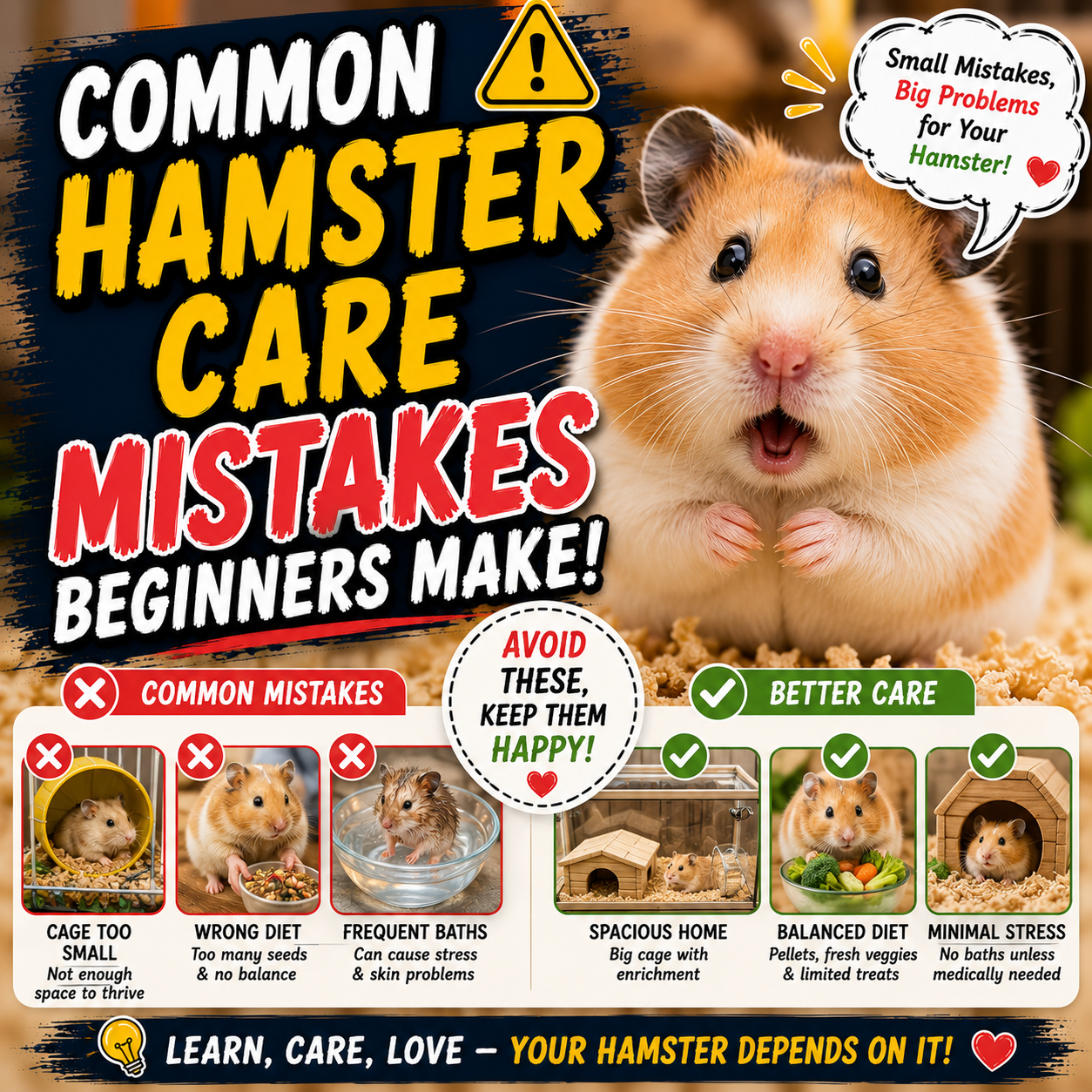
Bringing home a new hamster is an incredibly exciting moment. These tiny, fluffy pocket pets look undeniably adorable as they stuff their cheek pouches and scramble around their enclosures. Because they are small and relatively inexpensive, many beginners assume that hamsters are a “low-effort, low-maintenance” starter pet perfect for a small bedroom desk.
Unfortunately, this misconception leads to a massive wave of accidental neglect. Much of the traditional advice found in corporate pet stores or on product packaging is outdated and biologically harmful to rodents. Falling into these common traps can induce extreme psychological stress, shorten your pet’s brief lifespan, or lead to tragic injuries.
Let’s unpack the 6 most common hamster care mistakes beginners make and learn how to configure a thriving, species-appropriate sanctuary for your new friend.
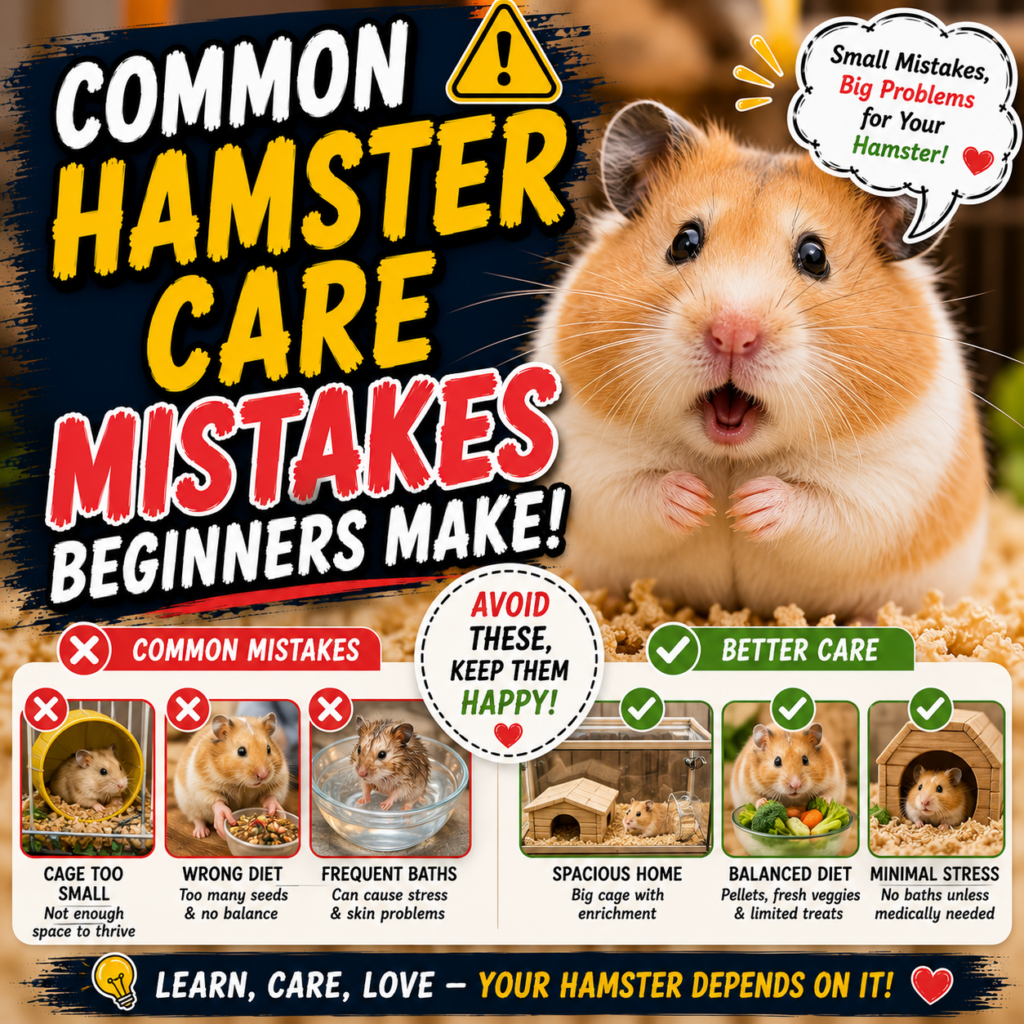
1. Buying a Cramped, Multi-Level Tiny Wire Cage
The absolute number one mistake beginner owners make is purchasing those colorful, plastic, modular cages featured prominently on pet store shelves.
While they look like fun amusement parks to humans, they are a claustrophobic prison to a hamster. Wild hamsters are hardwired to travel between 5 to 9 miles every single night in search of food. They require extensive, unbroken horizontal territory—not vertical multi-level compartments.
- The Behavioral Warning: When restricted to a small cage, hamsters develop confinement anxiety and engage in bar biting or monkey barring (climbing the ceiling and dropping heavily). These are not cute acrobatics; they are frantic stress signals that can wear their teeth down to the gums or cause spinal fractures.
- The Modern Standard: Bypass standard pet cages completely. Opt for a large glass aquarium, a wooden reptile enclosure, or a DIY plastic bin cage offering a minimum of 800+ square inches of unbroken floor space.
2. Providing Inadequate Bedding Depth (Shallow Substrate)
Many beginners simply scatter a thin, 1-to-2-inch layer of wood shavings across the floor of the cage just to absorb urine. This deprives the hamster of its most basic evolutionary instinct: burrowing.
Hamsters are underground rodents, not surface dwellers. In the wild, they build complex subterranean networks to hide from predators, manage temperatures, and sleep securely.
- The Depth Metric: Your enclosure must be deep enough to hold a minimum of 6 to 10 inches of tightly packed paper bedding. Deep substrate allows your hamster to construct stable, permanent tunnels, instantly lowering their stress levels and triggering their natural confidence.
- Material Warning: Never use pine or cedar wood shavings, as their natural phenols cause severe respiratory infections. Stick to safe, unscented paper-based bedding or kiln-dried aspen.
3. Selecting a Dangerously Small Running Wheel
Almost every beginner setup includes a running wheel, but it is almost always the wrong size. If you see your hamster running on its wheel and its spine is arching or bending backward like a banana, the wheel is dangerously small.
Running on a curved wheel puts immense mechanical strain on a hamster’s spine. Over time, it causes painful friction, spinal deforming, and permanent nerve issues. Eventually, the hamster will refuse to use the wheel, leaving them with no outlet to burn off their massive midnight stamina.
Always adhere to these strict veterinary sizing standards:
- Syrian Hamsters (Golden/Teddy Bear): Require a jumbo wheel with a minimum diameter of 11 to 12 inches.
- Dwarf Hamsters (Roborovski/Winter White): Require a wheel with a minimum diameter of 8 inches.
❌ Danger Setup: 6-inch Wire Mesh Wheel  ──► Causes Spine Deformities & Pinched Paws
🌟 Premium Setup: 11-inch Solid Surface Wheel ──► Promotes Safe, Flat Running Posture
4. Housing Two Hamsters Together (The Territorial Trap)
Another common mistake is purchasing a pair of hamsters so they “don’t get lonely.” Beginners often project human social needs onto an animal that biologically operates completely differently.
- Syrian Hamsters are STRICTLY Solitary: They have absolute zero tolerance for roommates. From 6 to 8 weeks of age onward, an adult Syrian hamster must live 100% alone. Forcing two Syrians to share a cage is a death sentence; they will fight aggressively until one or both are fatally wounded.
- What about Dwarfs? While certain Dwarf breeds are semi-social in the wild, keeping them together in captivity is highly volatile and risky. Even same-sex littermates can suddenly launch into bloody territory wars as their adult hormones kick in. For beginners, the safest path is always one hamster per enclosure.
5. Using Unsafe Plastic “Hamster Balls” for Exercise
For decades, plastic running balls have been marketed as a fun, safe way to let a hamster explore the living room floor. In reality, modern reptile and rodent welfare organizations consider hamster balls to be dangerous stress traps.
- Sensory Deprivation: Hamsters have terrible eyesight and navigate entirely using their whiskers, acute hearing, and scent marking. Inside a plastic ball, their primary senses are completely blocked.
- The Illusion of Joy: When a hamster sprints inside a ball, they aren’t exercising happily—they are running in absolute panic because they cannot find a way to escape the transparent sphere.
- Physical Hazards: Their tiny toes can easily slip through the narrow ventilation slits, causing broken limbs. Furthermore, the lack of airflow forces them to breathe in toxic ammonia from their own urine while inside the ball.
- The Safe Alternative: Set up a secure, fabric pet playpen or use a dry bathtub lined with towels for supervised floor time exploration.
6. Disregarding Their Sleep Schedule (Daytime Waking)
Because hamsters are strictly nocturnal or crepuscular, they sleep heavily throughout the morning and afternoon, waking up only when the sun sets.
A common beginner mistake—especially in households with young children—is constantly poking, prodding, or waking a hamster up during the day to play. Disrupting a hamster’s natural circadian rhythm causes chronic cortisol spikes, which actively destroys their immune system. It also triggers their defensive startle reflex, which can cause them to bite your fingers out of blind terror.
Beginner Care Mistakes: Quick Troubleshooting Matrix
| What You Might See | The Hidden Mistake | The Immediate Upgrade |
| Hamster chewing relentlessly on cage bars. | Severe Confinement Stress / Boredom | Upgrade to a solid glass tank or an 800+ sq in bin cage. |
| Fur loss, sneezing, or wet eyes. | Toxic Wood Shavings or Dirty Bedding | Switch to unscented paper substrate; deepen to 8+ inches. |
| Hamster ignoring its wheel completely. | The Wheel is Too Small / Painful | Buy an 11-12″ solid-surface wheel for Syrians. |
| Sudden lunging or biting when approached. | Daytime Exhaustion / Trust Deficit | Never wake them up during sleep hours; tame slowly at night. |
Conclusion: Trade Conveniences for Biology
At the end of the day, successfully keeping a hamster boils down to respecting their evolutionary biology rather than relying on commercial marketing. By investing in an expansive solid-walled habitat, filling it with a deep ocean of paper burrowing substrate, providing a spine-safe running wheel, and keeping their environment solitary and quiet, you will easily bypass the common pitfalls that plague most beginner keepers.
Give your pocket pet the horizontal space and digging freedom they deserve, and enjoy the magical, rewarding experience of a truly relaxed, happy hamster!