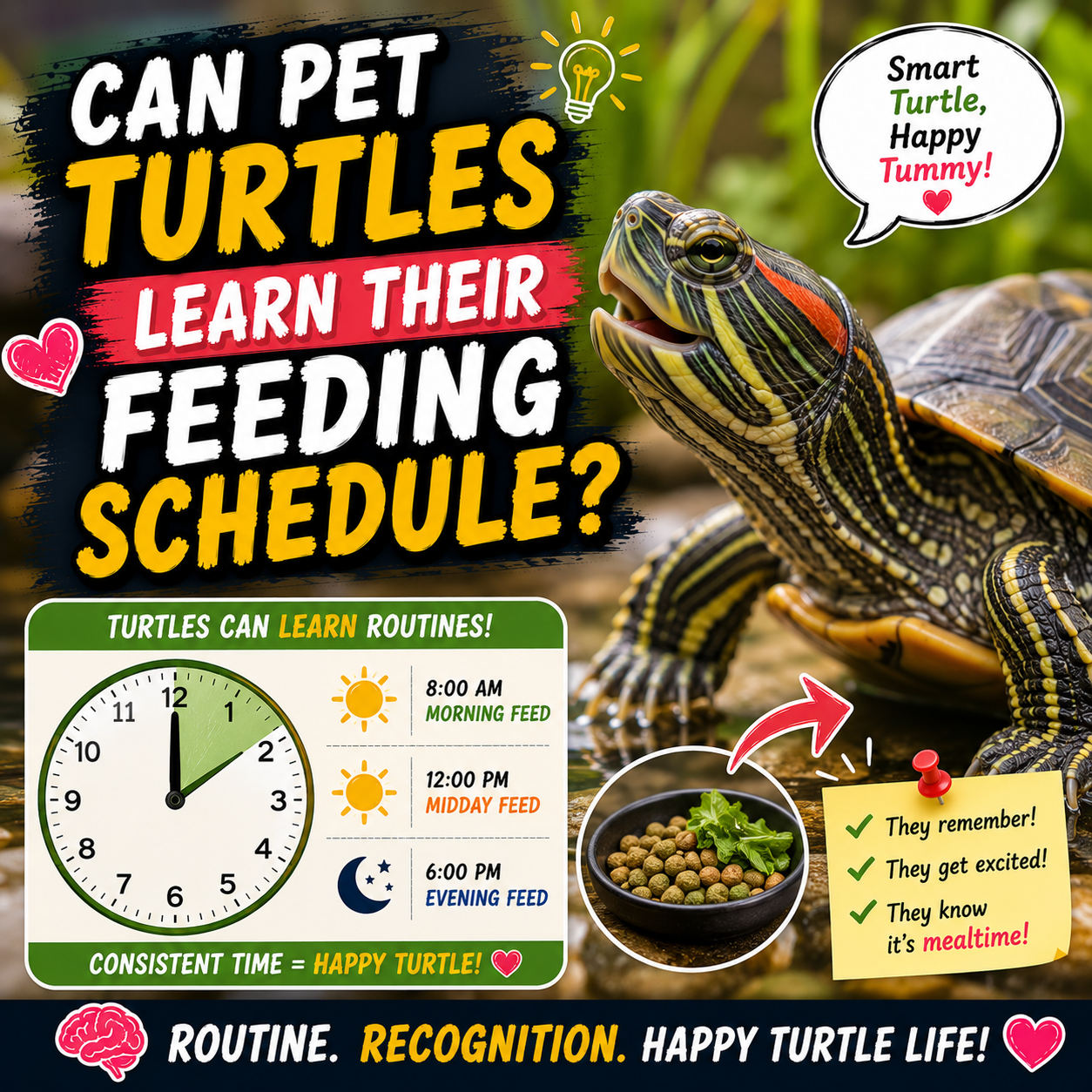
When people think of pets that live by a strict daily schedule, dogs and cats instantly come to mind. A dog knows exactly when it is time for a morning walk, and a cat will ruthlessly meow at your bedroom door the exact minute breakfast is late.
Turtles, on the other hand, are traditionally viewed as slow, primitive reptiles that operate purely on basic survival instincts. Most people assume they simply swim around their tanks aimlessly, completely unaware of the passing hours.
But if you own an aquatic turtle or a box turtle, you have likely noticed a fascinating pattern. As feeding time approaches, your turtle might suddenly wake up, swim frantically to the front of the glass, or hover expectantly beneath the feeding hatch.
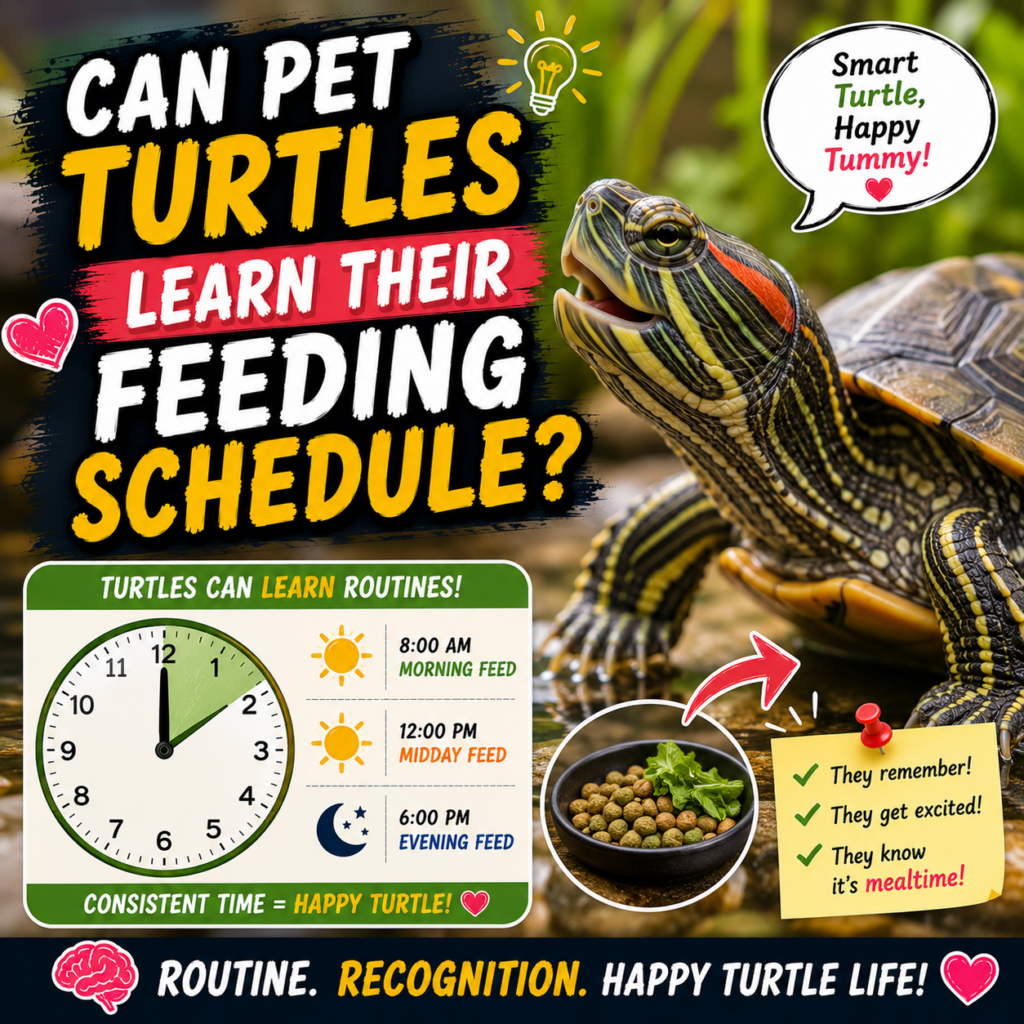
This leaves many reptile parents asking an excellent question: Can pet turtles learn their feeding schedule?
The short answer is yes, they absolutely can! Let’s dive into the fascinating world of reptile intelligence and explore the science behind how turtles track time and map out their daily routines.
The Science of Reptile Intelligence: Internal Clocks
The old myth that reptiles are unintelligent, forgetful creatures has been thoroughly disproven by modern herpetologists. Turtles are ancient, highly evolved evolutionary survivors with advanced spatial memory and cognitive mapping capabilities.
Turtles track and predict their daily feeding routines using two distinct methods:
1. The Circadian Rhythm (Their Internal Biological Clock)
Like humans, turtles possess a highly calibrated internal biological clock known as the circadian rhythm. This internal mechanism regulates their sleep-wake cycles, metabolic changes, and hormone releases over a 24-hour loop.
Because turtles are cold-blooded ectotherms, their internal clock is heavily linked to their environment—specifically the timing of their tank lights. When your basking heat and UVB lights click on automatically every morning, it sets off a biological alarm clock inside your turtle’s brain, kickstarting their metabolism and triggering their hunger drive at the exact same intervals every day.
2. Associative Learning (Classical Conditioning)
Turtles are masters of associative learning. When you perform a repetitive action right before feeding them, your turtle’s brain treats that action as a visual or auditory trigger.
Over time, they experience classical conditioning:
$$\text{Your Footsteps / Room Lights Turning On} \longrightarrow \text{The Human Appears} \longrightarrow \text{Delicious Pellets}$$
They don’t just recognize the food; they recognize the sequential environmental cues that lead to the food, allowing them to accurately anticipate dinner before a single pellet even hits the water column.
3 Clear Signs Your Turtle Knows It’s Feeding Time
If your turtle has successfully mapped out its daily schedule, they will display these distinct behavioral indicators:
- The “Glass Dance” Welcome Committee: When you walk into the room around their scheduled meal hour, does your turtle instantly rush to the front glass pane, frantically paddling its legs and waving its claws? This behavior—known as “glass dancing”—is a clear, conditioned expression of excitement and anticipation.
- Staring at the Feeding Spot: Many turtles will anchor themselves directly beneath the specific corner or hatch where you normally drop their pellets or fresh dandelion greens, refusing to move until the food arrives.
- Tracking Your Silhouette: If you move from left to right across the room during their feeding hour, a routine-trained turtle will lock its eyes on you and swim along the glass wall, following your silhouette like an underwater puppy.
The Danger of an Unstructured Feeding Routine ⚠️
Because turtles are highly sensitive to routines, failing to maintain a structured schedule can cause environmental and physical issues:
- The Overfeeding Trap (Begging Habits): Because turtles are opportunistic foragers in the wild, their natural instinct is to eat as much as possible whenever food is available. If you reward their cute “begging dance” with pellets multiple times a day outside of their schedule, you will quickly cause obesity, fatty liver disease, and dangerous shell pyramiding.
- Water Quality Crashes: Feeding your turtle at random times often leads to uneaten food dissolving into the water column. This fuels massive ammonia spikes, murky brown water, and foul-smelling bacterial blooms.
How to Set Up a Flawless Feeding Schedule
To maximize your turtle’s biological health and make tank maintenance effortless, use this professional routine checklist:
- Deploy Light Timers: Plug your basking heat lamps and UVB bulbs into an automatic 24-hour mechanical timer. Set them to run for a strict 12 hours on and 12 hours off cycle. This keeps their internal biological clock perfectly calibrated.
- Feed at the Same Time Everyday: Choose a consistent window that matches your lifestyle (e.g., 8:00 AM for juveniles, or every other morning at 9:00 AM for adult sliders). Stick to this window rigidly.
- Utilize the Separate Feeding Tank Trick: If you want to keep your main tank pristine longer, transfer your turtle to a separate plastic tub filled with warm water for mealtime. Because they anticipate the schedule, they will quickly learn to eat—and complete their post-meal bathroom business—in the feeding tub within 15 to 20 minutes, keeping their main habitat perfectly clear.
🌟 The Ideal Daily Loop:
7:00 AM: Lights Timer Clicks On ──► 8:00 AM: Metabolism Peaks (Begging Begins) ──► 8:15 AM: Scheduled Mealtime
Conclusion: An Intelligent, Observant Companion
At the end of the day, a pet turtle is far more observant and intelligent than most people give them credit for. They are highly capable of learning exactly when, where, and how their meals are delivered. By anchoring their environment with automatic light timers and a rigid feeding window, you won’t just satisfy their appetites—you will actively stimulate their active minds and minimize environmental stress.
Embrace their quirky morning begging dances, protect their biological rhythms, and enjoy the deeply rewarding, time-tracked bond of a thriving reptile companion!