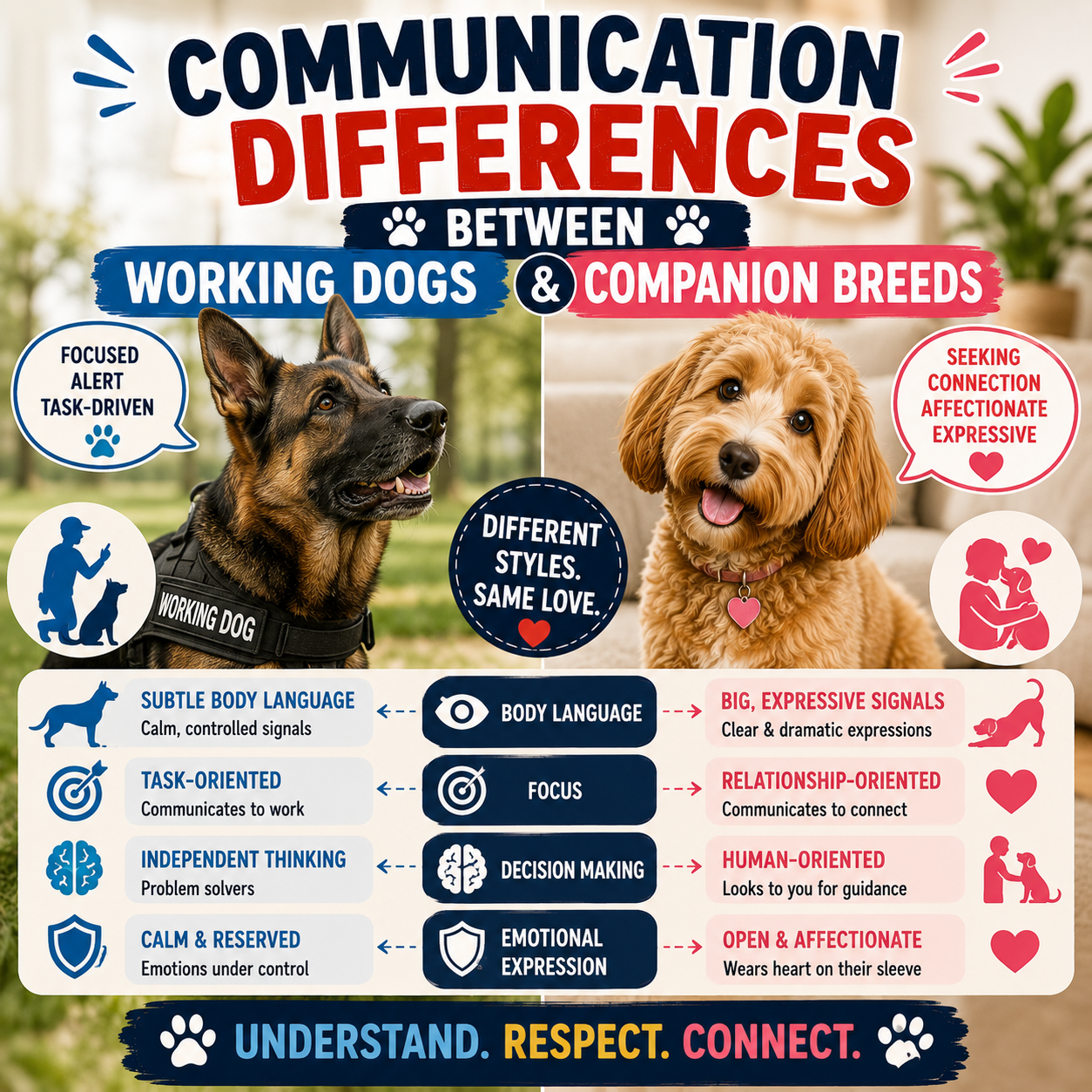
If you’ve ever wondered why your Border Collie seems to “talk” to you with intense, unblinking stares while your French Bulldog expresses their needs with dramatic snorts and cuddles, you’re not just imagining it. While all dogs share the same basic language of body movements, the communication styles of working dogs and companion breeds have evolved very differently.
Understanding these differences is the key to a deeper bond with your pet and a more harmonious home.
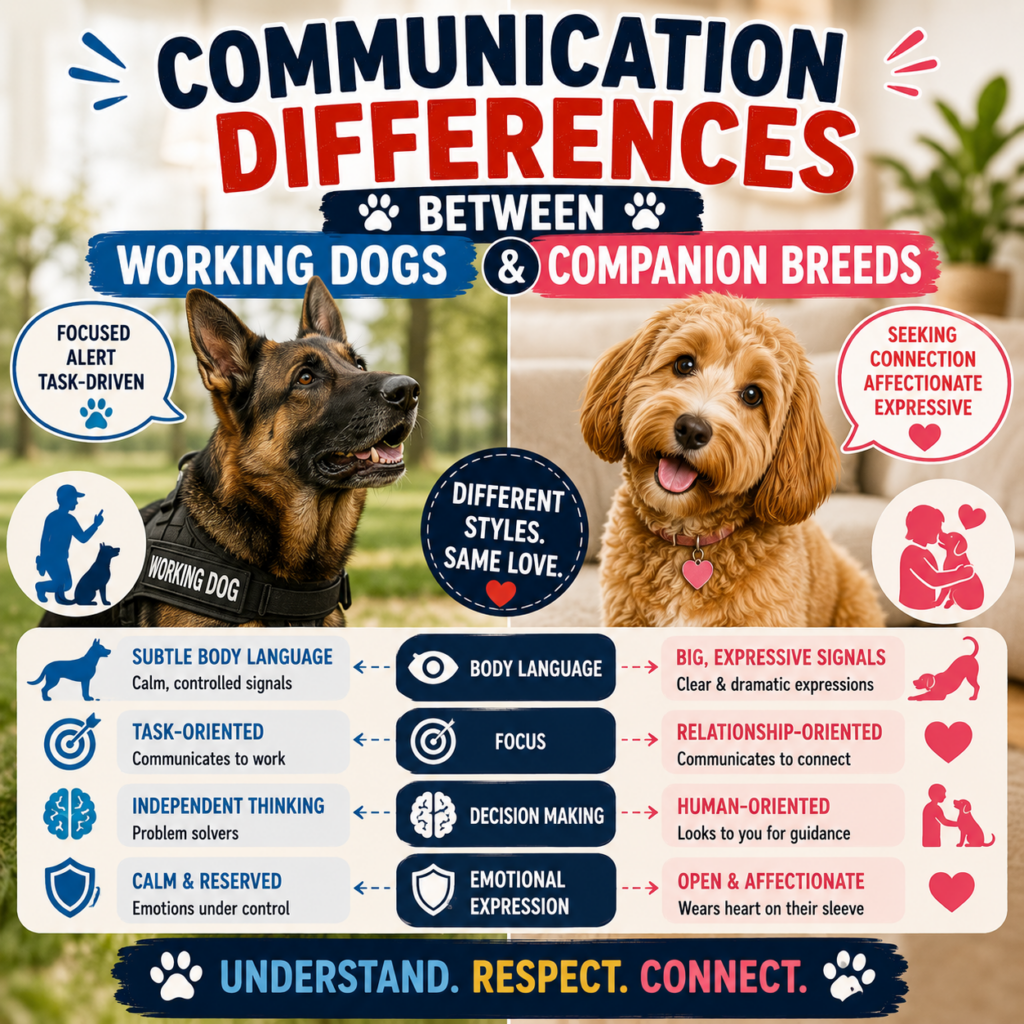
1. Working Dogs: The Masters of Intent and Focus
Working dogs—such as Border Collies, German Shepherds, and Malinois—were bred for specific, high-stakes tasks like herding, guarding, or hunting. Their communication is driven by utility and purpose.
- The “Intense Stare”: Herding breeds use the “eye” (intense, unblinking eye contact) to control movement. When they do this to you, they aren’t necessarily being aggressive; they are “working” you. They are waiting for your next command or trying to influence your next move.
- Precision and Physical Cues: These breeds are highly sensitive to subtle human body language. They often communicate through hyper-focus and physical posturing. A slight tilt of the head or a shift in weight is their way of asking, “What’s the task?”
- Active Engagement: Working dogs often communicate via “high-energy” behaviors, such as nudging, circling, or bringing you an object (like a toy or a stick). They are essentially saying, “I have energy; let’s put it to work.”
2. Companion Breeds: The Masters of Social Connection
Companion breeds—such as Cavalier King Charles Spaniels, Pugs, or Shih Tzus—were bred specifically to be human partners. Their communication is driven by social bonding and emotional feedback.
- Vocalizations and Expressions: Because they were developed to be “lap dogs,” these breeds are often more expressive with their faces and voices. They use sighs, grunts, whimpers, and “puppy eyes” to solicit affection and comfort.
- Direct Physical Contact: Where a working dog might stand at a distance to observe, a companion breed communicates by physically attaching themselves to you. Sitting on your feet, leaning their body weight against you, or demanding belly rubs are their primary ways of saying, “I’m here, and I love you.”
- Emotional Reading: Companion breeds are experts at reading your mood. They often mirror their owner’s state—settling down when you’re relaxing or becoming excited when they sense you are happy. Their communication is designed to strengthen the human-dog pair.
3. Bridging the Gap: How to Respond
Regardless of breed, all dogs respond to consistency, but the type of interaction they crave differs:
- If you have a working dog: Communicate through structure and mental challenges. Give them a job, teach them complex tricks, and use clear, direct cues. They thrive when you act as a calm, confident “leader” who provides them with a purpose.
- If you have a companion breed: Communicate through shared time and affection. They prioritize quality time over complex tasks. A simple “good boy” with a soft tone and a gentle petting session is far more valuable to them than a high-intensity agility drill.
4. Why Breed Matters in Communication
It’s easy to misunderstand a dog’s behavior if you expect them to act against their breeding. A Border Collie that herds the children is acting on their communication instinct, not being “naughty.” A Pug that refuses to participate in a long, training-heavy hike is simply prioritizing their role as a social companion over a physical job.
By recognizing these innate tendencies, we stop forcing our dogs to be something they aren’t and start appreciating the unique way they reach out to us.
Conclusion
Whether your dog is whispering through a soft lean or shouting through an intense stare, they are constantly trying to communicate their world to you. Working dogs speak the language of collaboration, while companion breeds speak the language of connection. When you learn to listen in the way they know best, you transform your relationship from “owner and pet” to “partners in life.”