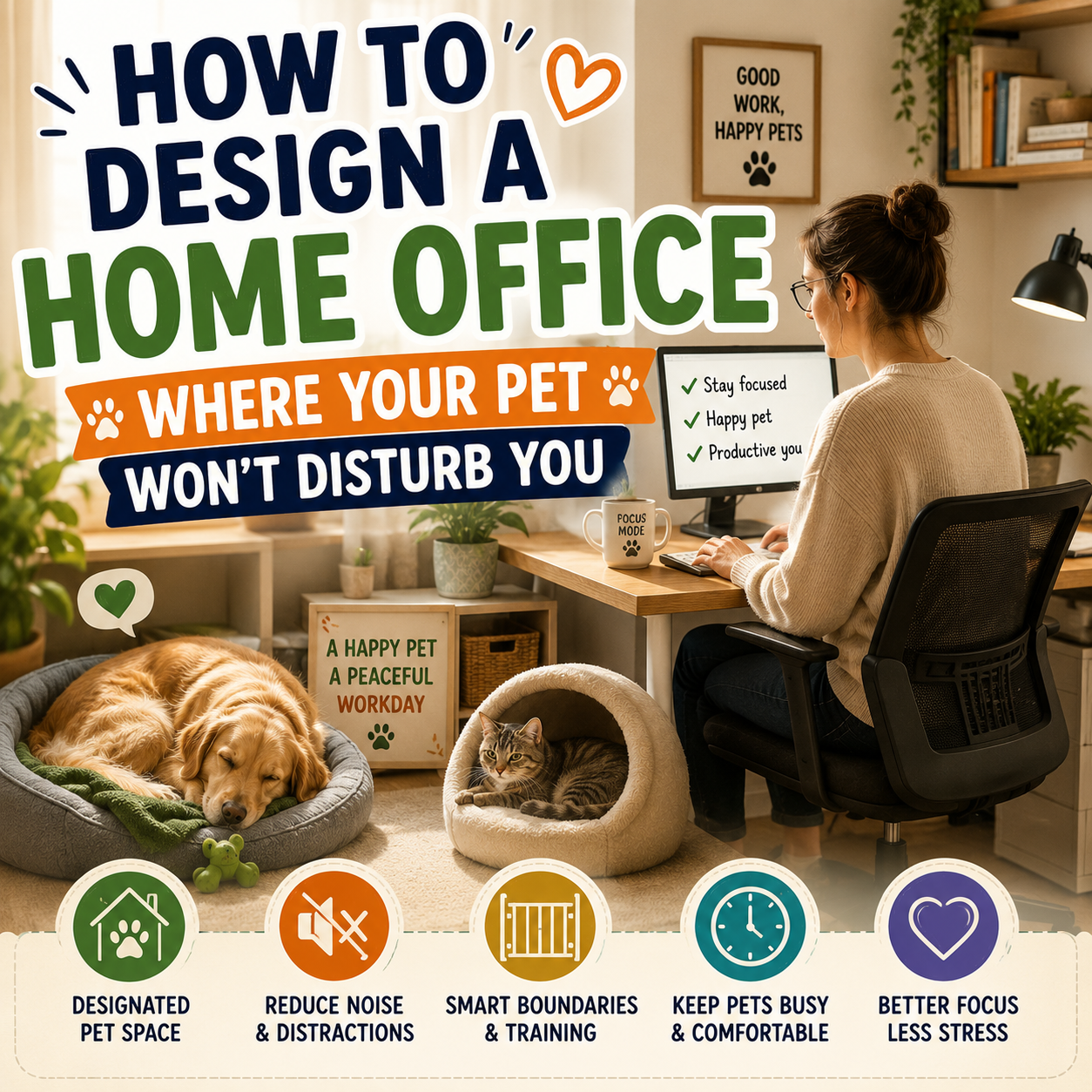
The dream of working from home is often interrupted by a “helpful” feline assistant walking across your keyboard or a playful dog nudging your elbow during a Zoom call. While we love our pets, productivity requires focus.
You don’t have to choose between your career and your pet’s companionship. By strategically designing your home office, you can create a space that balances your professional needs with your pet’s desire to be near you. Here is how to build a pet-proof, distraction-free home office.
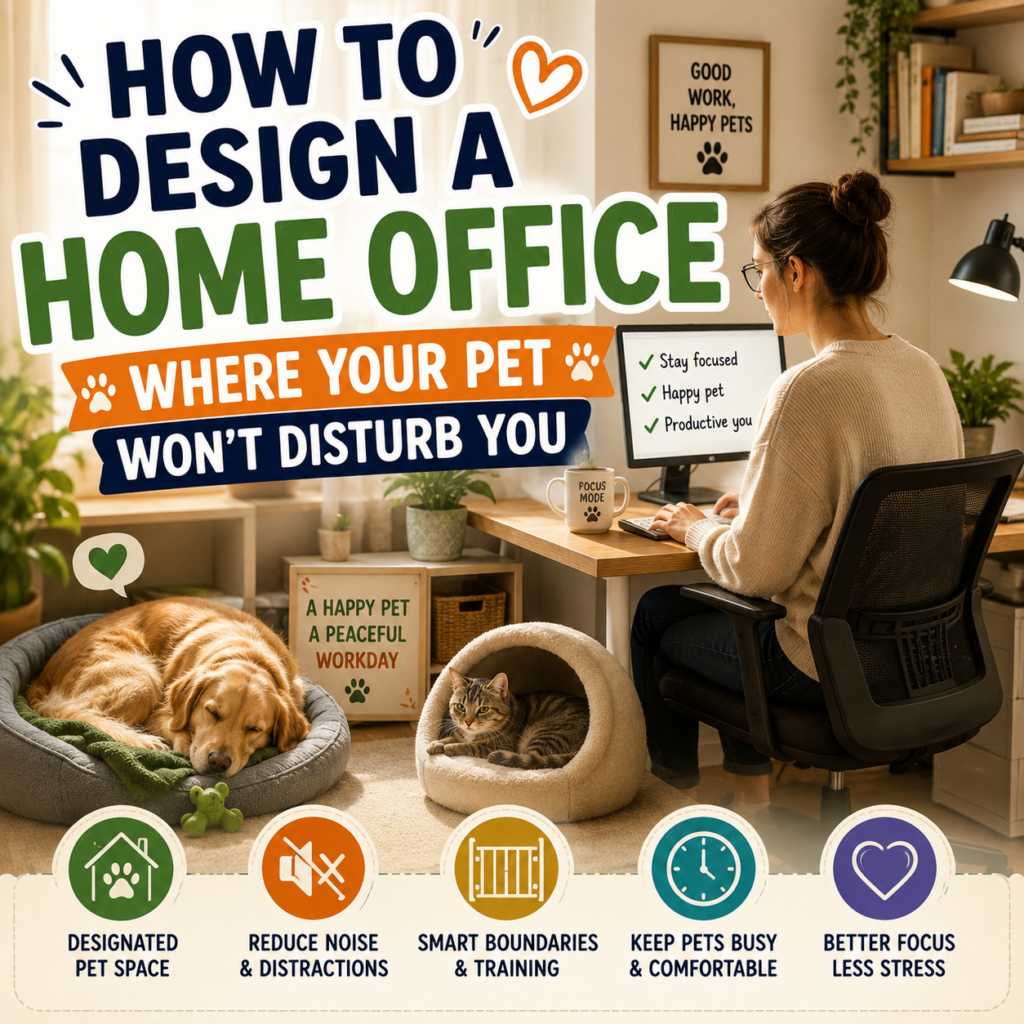
1. Create a Dedicated “Pet Zone”
The most common reason pets disturb us is that they want to be part of the action. Give them a prime spot in your office, but not on your desk.
- The Window Perch: Cats love to observe the world. Place a cat tree or a comfortable bed near a window inside your office. They will be entertained by the outdoors and stay off your workspace.
- The “Under-Desk” Sanctuary: Dogs often prefer to be near your feet. Create a cozy, enclosed bed or a soft rug directly under your desk. This satisfies their need to be close to “the pack” without occupying your chair or equipment.
2. Eliminate “Cable Temptation”
Nothing ends a workday faster than a chewed power cord or a toppled monitor. Safety is the foundation of a distraction-free office.
- Cable Management Solutions: Use cable sleeves, wall-mounted raceways, or under-desk cable trays to hide wires completely.
- Elevated Equipment: If your pet is a jumper, move non-essential equipment (like printers or routers) to wall-mounted shelves or inside a cabinet.
3. Use “Positive Reinforcement” Furniture
If your pet loves to sit where you are sitting, give them a more attractive alternative.
- The “Work Buddy” Chair: Keep an extra chair or a cushioned footstool next to yours. By consistently rewarding your pet with treats for sitting on their specific “buddy chair,” they will learn that staying there earns them rewards—and your attention.
- Interactive Toys: Keep a stash of quiet, engaging toys (like puzzle feeders or snuffle mats) in your office. When you have a high-stakes call, offer a puzzle toy to keep them mentally occupied and physically distant from your keyboard.
4. Establish “Office Hours” and Boundaries
Physical design is only half the battle; training is the rest.
- Visual Cues: Pets are observant. If you use a door, keep it shut during meetings. If you have an open-plan office, consider using a baby gate or a decorative screen to clearly mark your “no-go zone.”
- Scheduled Breaks: Build “pet breaks” into your calendar. If your dog or cat knows they will get 10 minutes of undivided attention and play every two hours, they are significantly less likely to demand it while you are typing.
5. Minimize Sensory Distractions
Sometimes pets disturb us because they are overstimulated or bored.
- Control the Environment: Use white noise machines or calm, instrumental music to muffle outside sounds that might make your dog bark.
- Temperature Control: A pet that is too hot or too cold will be restless and seeking your lap for warmth or your chair for comfort. Ensure your office has good airflow so your pet stays comfortable in their own designated bed.
Conclusion
A home office should be a space where you can excel at your work without feeling guilty about excluding your pets. By creating a “Pet Zone,” securing your cables, and establishing a routine of structured play, you can cultivate a harmonious environment. When your pet is comfortable, engaged, and provided with their own designated space, they are much more likely to let you get the job done.