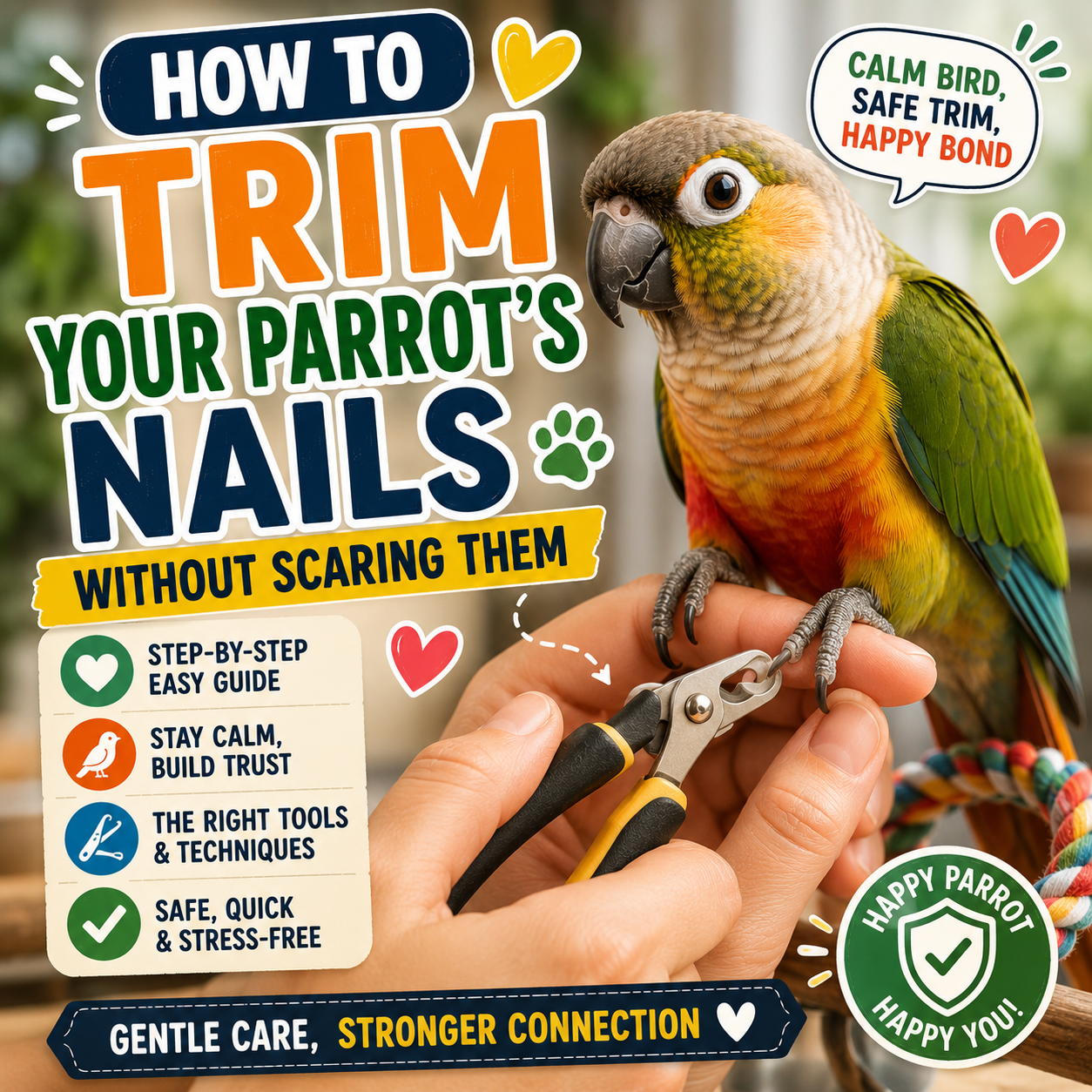
For many parrot owners, the monthly nail trim is a dreaded chore. It’s stressful for you, and it can be downright terrifying for your bird. However, regular maintenance is crucial for your parrot’s comfort. Overgrown nails can cause your bird to snag their feet on perches, suffer from foot infections, or even develop bumblefoot.
The secret to a stress-free grooming session lies in desensitization and positive reinforcement. Here is how to trim your parrot’s nails while keeping your bond intact.
1. Preparation: The Foundation of Trust
Before you even think about the clippers, your bird needs to be comfortable with being handled.
- The “Towel Game”: If your bird is not used to being wrapped, start by simply placing a soft towel near them during playtime. Gradually move to gently touching them with the towel, rewarding them with their favorite treats (like sunflower seeds or nuts) throughout.
- Handle the Feet: Spend a few minutes each day gently touching your bird’s feet while talking to them in a calm, soothing voice. If they remain calm, offer a high-value reward.
- Gather Your Tools: Ensure you have sharp, bird-specific nail clippers, styptic powder (or cornstarch) in case of minor bleeding, and a towel. Being prepared prevents you from fumbling, which can alarm your bird.
2. The Step-by-Step Trimming Process
When you feel both you and your bird are ready, follow these steps:
- Create a Calm Environment: Choose a quiet room with minimal distractions.
- The Gentle Restraint: Use a clean, soft towel to gently restrain your bird. Wrap them securely but not tightly, ensuring their wings are tucked in so they can’t flap. Keep the feet exposed.
- Identify the “Quick”: This is the most important part! Look for the blood vessel (the quick) inside the nail. On light-colored nails, it appears as a pink line. Never cut into this area. If your bird has dark/black nails, trim only the very tip—the sharp, hook-like point—to be safe.
- Make Small Cuts: Instead of one big snip, take off small slivers. This minimizes the risk of hitting the quick and makes the process faster.
- Keep Styptic Powder Handy: If you accidentally nip the quick, don’t panic. Dip the nail into the styptic powder immediately. Your bird will be fine, but stay calm to reassure them.
3. Post-Trim Rewards
The moment the last nail is trimmed, release the bird and provide a “jackpot” reward—a special treat they rarely get. This creates a positive association with the experience. Let them have some quiet time alone afterward to preen and settle down.
4. Tips for Success
- Keep it Short: If your bird becomes visibly stressed (panting, heavy breathing, or trying to bite), stop immediately. You can always finish the remaining nails tomorrow.
- Use the Right Perches: To reduce the frequency of trims, provide a variety of perch textures. Sandpaper-covered perches are generally discouraged, but natural wood perches of varying diameters help wear down nails naturally.
- Don’t Rush: If you are nervous, your bird will know. Take a few deep breaths before you begin.
When to Seek Professional Help
If your parrot is extremely aggressive, or if you are not confident in identifying the quick, there is no shame in seeking professional help. Most avian veterinarians or experienced bird groomers can perform this service quickly and safely. It is a small price to pay to maintain your bird’s trust and health.