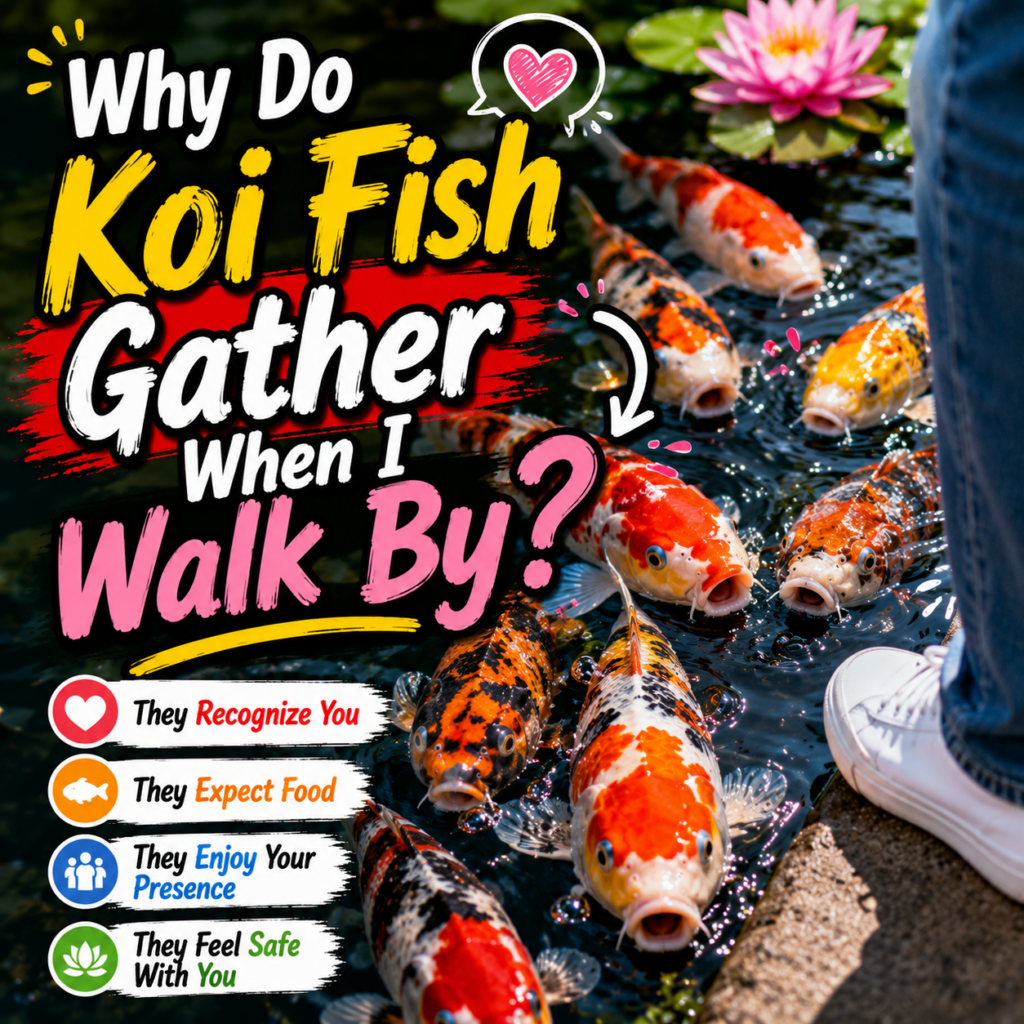
There is nothing quite like the peaceful serenity of watching majestic, colorful koi glide gracefully through a crystal-clear backyard pond. However, if you are a pond hobbyist, you are not the only one admiring those vibrant “living jewels.” To local wildlife, your pristine garden pond looks exactly like an open-concept, high-end seafood buffet.
Among all backyard predators, the Great Blue Heron is the undisputed public enemy number one. These highly patient, intelligent wading birds can spot a reflective koi from high in the air, land silently at dawn, and completely wipe out a prize-winning school of fish in a matter of minutes. Add in nocturnal threats like raccoons, feral cats, and owls, and your pond can quickly become a dangerous hunting ground.
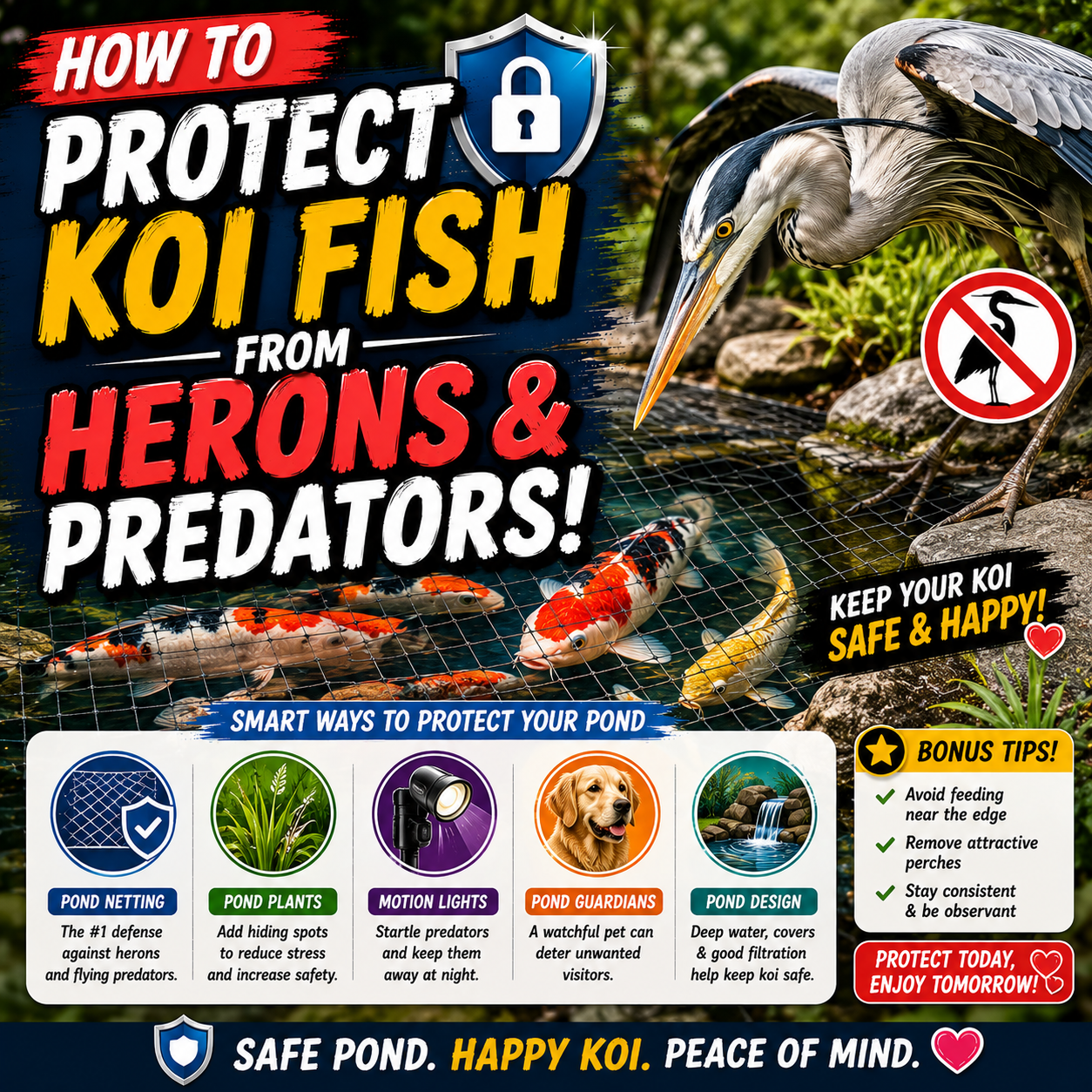
So, how do you protect koi fish from herons and predators effectively? Let’s break down the 5 best, veterinarian-approved defense strategies to transform your pond into an unbreachable aquatic fortress.
1. Install Heavy-Duty Surface Pond Netting (The Ultimate Physical Barrier)
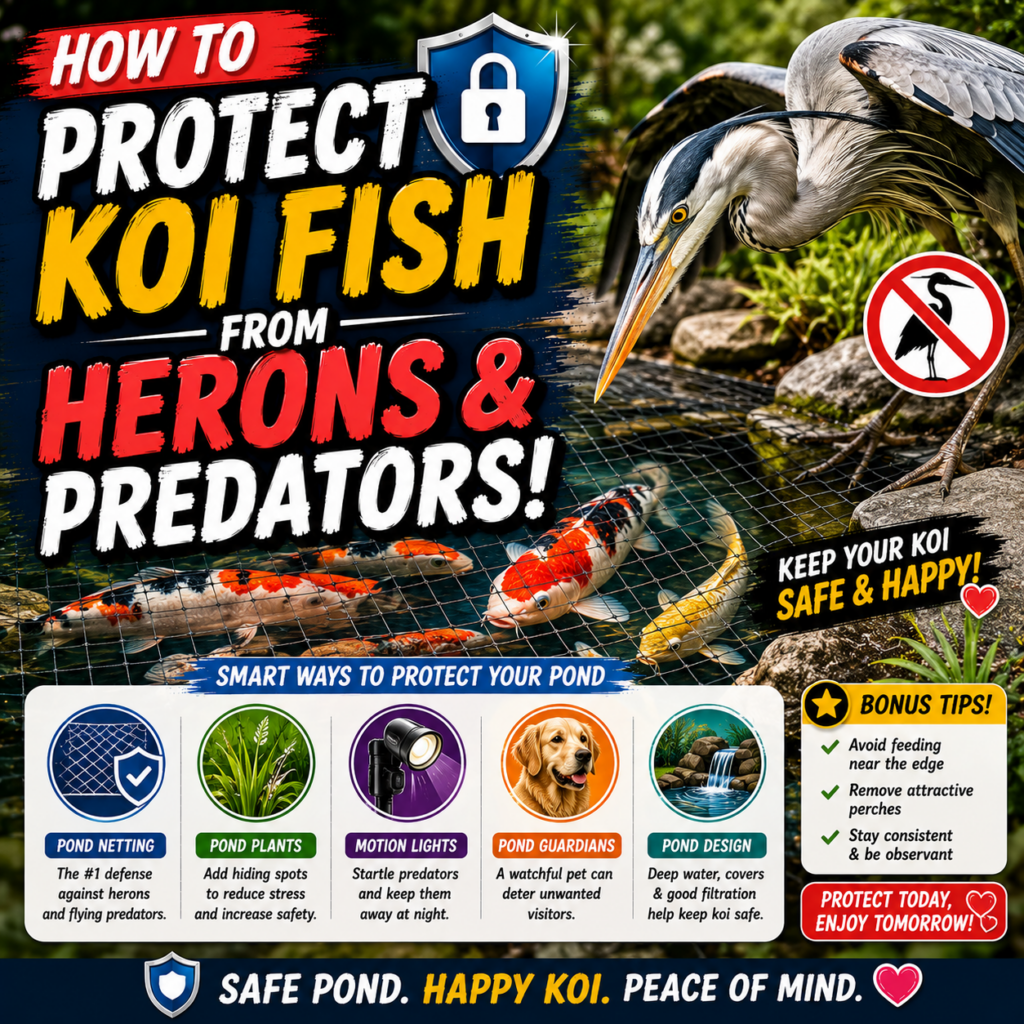
If you are dealing with a persistent heron or an active raccoon population, visual deterrents alone will not cut it. You need a physical barrier. Installing high-quality pond netting is the single most effective way to protect your fish.
- How It Works: A durable, UV-treated polyethylene net with a fine mesh (0.25 to 0.5 inches) stretched tightly across the entire surface physically prevents herons from stabbing their beaks into the water and stops raccoons from reaching their paws in.
- The Pro-Aesthetic Tip: Many owners hate netting because it ruins the natural view of the water. To fix this, elevate the net 1 to 2 feet above the water column using a custom geometric frame, or select a specialized ultra-fine black netting that completely disappears from sight when viewed from a few yards away.
2. Deploy Motion-Activated Scarecrow Sprinklers
Herons are naturally cautious, solitary hunters that detest surprise movements and loud noises. You can exploit this survival instinct using technology by installing a motion-activated scarecrow sprinkler along the pond perimeter.
👉 The Scarecrow Defense Loop:
Predator steps into sensor zone ──► Blazing infrared detection ──► Sudden 3-second high-pressure water blast + Loud clicking sound ──► Predator flees in terror!
Because the water blast is completely randomized and pairs a physical splash with a loud mechanical noise, herons, raccoons, and cats cannot habituate or adapt to it. It teaches them that approaching your pond is a highly stressful, uncomfortable experience without causing any physical harm to the wildlife.
3. Re-Engineer Pond Depth and Add Predator Caves
Most backyard fish losses happen because standard garden ponds are built too shallow. A shallow pond with gently sloping, beach-like edges is a dream layout for a wading bird. Herons will simply step into the shallow shelves and comfortably spear fish as they swim past.
To naturally outsmart wild predators, utilize these engineering standards during your pond builds or renovations:
- Enforce a 3-to-4-Foot Minimum Depth: Ensure your pond walls drop straight down vertically into a depth of at least 3 to 4 feet (1 to 1.2 meters) with zero shallow steps. Herons cannot swim; they must wade. If the water drops off instantly into deep zones, the heron cannot physically stand to hunt.
- Install Koi Caves and Shelter Tunnels: When a shadow crosses the water, a koi’s natural instinct is to dive and hide. Drop large, heavy-duty black PVC pipes, custom concrete tunnels, or structured rock shelving (known as koi caves) along the deepest floor zone. This gives your fish a subterranean bunker where herons and raccoons cannot reach them.
4. String High-Tensile Heron Deterrent Wires
Herons do not naturally land directly in deep water; they land on dry land or a nearby lawn and slowly walk up to the water’s edge. You can completely disrupt their walking paths by stringing high-tensile fishing line or wire tripwires around the pond boundary.
- The Setup: Drive sturdy stakes into the ground around the perimeter of your pond. String heavy-duty, invisible fishing line horizontally across the stakes at two critical heights: 6 inches and 14 inches off the ground.
- The Result: When a heron tries to walk toward the water’s edge in the dim morning light, its long legs will bump into the invisible, rigid wire. Because they cannot see what is blocking them, they will panic, sense a trap, and fly away immediately.
5. Utilize Decoys Wisely (The Heron Decoy Rules)
Placing a realistic, life-sized plastic heron decoy near the water is a highly popular budget tactic. Because herons are fiercely territorial birds that hate competing with other herons for food, a hunting bird flying overhead will see the decoy and assume the pond is already claimed.
However, if you want this visual trick to work long-term, you must follow the Decoy Relocation Rule:
Static Decoy = Bored Predator = Deadly Attack
Herons are incredibly smart observers. If they see the plastic decoy sitting in the exact same spot for three consecutive days, they will quickly realize it is a fake and bypass it. You must move the decoy to a brand-new position along the bank every single morning to maintain the illusion of life!
Predator Defense Checklist: Match the Threat
Use this quick-reference matrix to identify and stop specific pond raiders:
| Target Predator | Primary Hunting Time | Best Defense Metric |
| Great Blue Heron | Dawn, Dusk, and Daylight | Straight vertical pond edges, tripwires, and motion-activated sprinklers. |
| Raccoons & Opossums | Late Night / Nocturnal | Tightly stretched surface netting and deep underwater koi caves. |
| Domestic / Feral Cats | Random / Opportunistic | Surface netting and dense, thorny perimeter landscaping (e.g., holly bushes). |
| Kingfishers & Hawks | Mid-Day | Submerged shelter tunnels and overhead shade sails. |
Conclusion: Layered Defense is Your Best Weapon
At the end of the day, protecting your prized koi from hungry predators requires a layered defense system. Relying on a single plastic decoy or a shallow cave leaves your fish vulnerable. By pairing a deep, vertical-walled pond architecture with high-tensile tripwires, motion sprinklers, and a protective layer of surface netting, you can easily outsmart local wildlife.
Secure your pond perimeter, invest in deep structural shelters, and enjoy the beautiful peace of mind that comes with a thriving, perfectly safe backyard ecosystem!