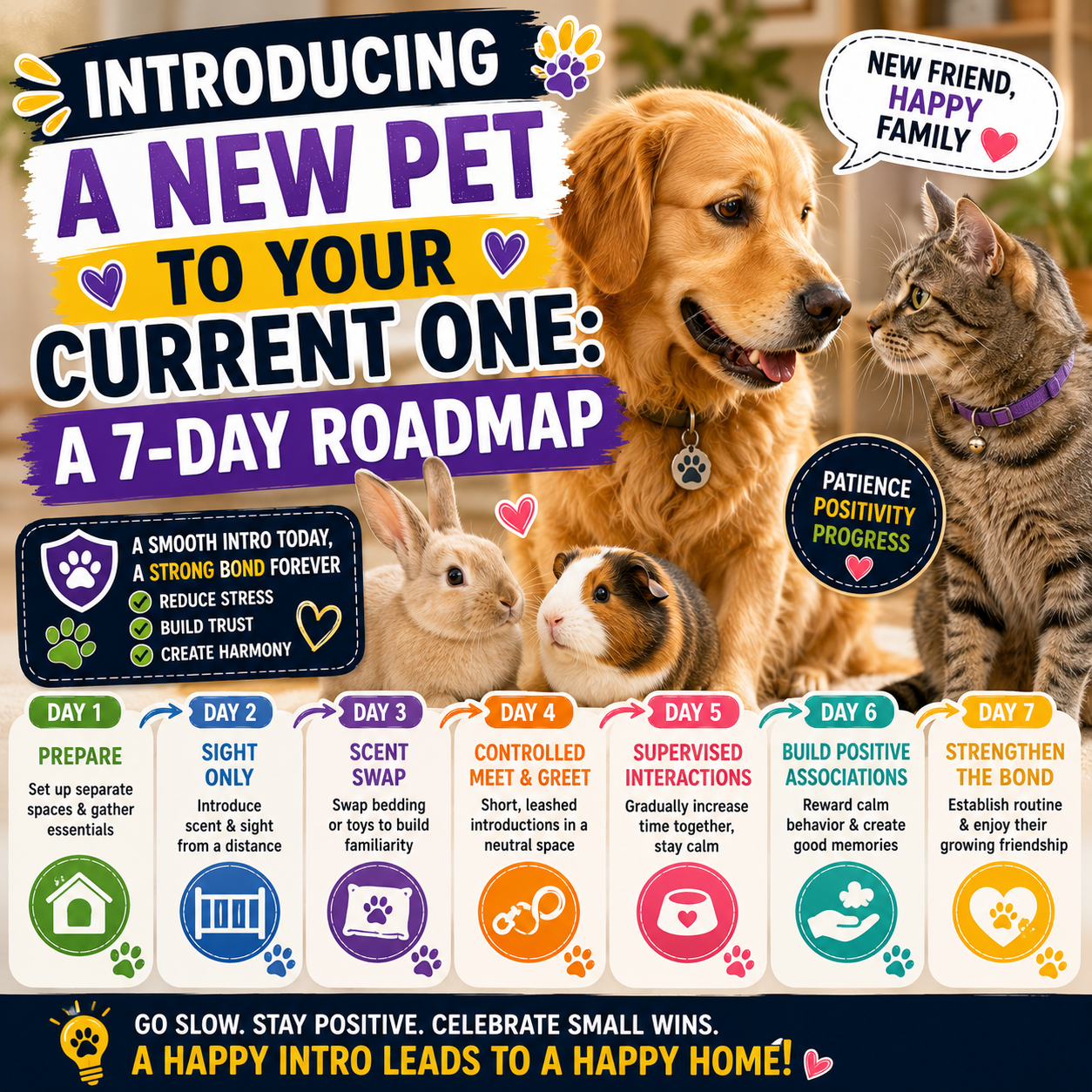
Bringing a new pet home is an exciting milestone, but for your resident pet, it can feel like an invasion of their territory. Rushing the introduction is the number one cause of long-term friction between pets. A slow, systematic approach—ideally over the course of one week—is the best way to foster a lifelong friendship.
Here is your 7-day roadmap to a peaceful introduction.

The Setup: Before Day 1
Before the new arrival, ensure you have a dedicated “base camp” for them. This should be a separate room equipped with their own food, water, litter box, and bedding. Resident pets must be kept completely separate from the new arrival during this first phase.
The 7-Day Roadmap
Day 1–2: The Scent Swap
Focus on introduction through smell rather than sight.
- The Action: Rub a clean towel on the new pet and place it in the resident pet’s area, and vice versa.
- The Goal: Allow them to become familiar with each other’s scent without the pressure of physical interaction. Watch for signs of aggression or intense curiosity.
Day 3: Visual Introduction (The Barrier Method)
If the scent swap went well, introduce visual contact using a secure barrier.
- The Action: Use a baby gate for dogs or a screen door/cracked door for cats. Keep the pets on opposite sides.
- The Goal: Let them see each other while remaining safe. Keep these interactions short and positive, using treats to reward calm behavior.
Day 4–5: Supervised Interaction (Leashed)
If they seem calm (no growling, hissing, or lunging) through the barrier, move to supervised face-to-face time.
- The Action: Keep the new pet on a leash or in a controlled area. Engage both pets in parallel activities, like playing with a toy or eating treats, while they are in the same room.
- The Goal: Redirect their attention to you and the rewards, rather than fixating on each other.
Day 6: Short Sessions Without Restraints
If they have been calm on leashes/under supervision, allow brief, un-restrained interaction.
- The Action: Keep the sessions very short (5–10 minutes). Supervise them constantly and be ready to calmly separate them if the energy shifts.
- The Goal: Encourage natural investigation under your watchful eye.
Day 7: Increasing Independence
By now, they should be comfortable in the same space.
- The Action: Gradually extend the time they spend together. However, never leave them alone unsupervised until you are 100% confident in their dynamic. Continue to provide separate resources (multiple food bowls, water stations, and beds) to prevent resource guarding.
Golden Rules for Success
- Prioritize the Resident Pet: Maintain your resident pet’s daily routine. They should not feel like they have been replaced.
- Resource Management: Resource guarding (fighting over food or toys) is the biggest spark for conflict. Always provide separate, identical items for both pets.
- Read the Body Language:
- Green Flags: Relaxed posture, play bows, sniffing, and looking away.
- Red Flags: Stiff body, ears pinned back, growling, hissing, or intense staring. If you see these, go back one step in the roadmap.
- Patience is Key: Every animal is different. If your pets need more than 7 days, that is perfectly okay! Never force an interaction that causes stress.
When to Seek Professional Help
If you observe consistent aggression, stalking, or inability to relax in each other’s presence, don’t hesitate to contact a certified professional pet trainer or a veterinary behaviorist. Early intervention can prevent bad habits from becoming permanent.