Rabbits are often misunderstood as “quiet” or “passive” pets. However, anyone who has spent quality time with a bunny knows that they are expressive, social, and complex creatures. Because they are prey animals, they often communicate through subtle physical cues rather than vocalizations.
Learning to decode rabbit body language is the key to building a strong bond with your furry friend. Here is how you can understand what your rabbit is feeling.
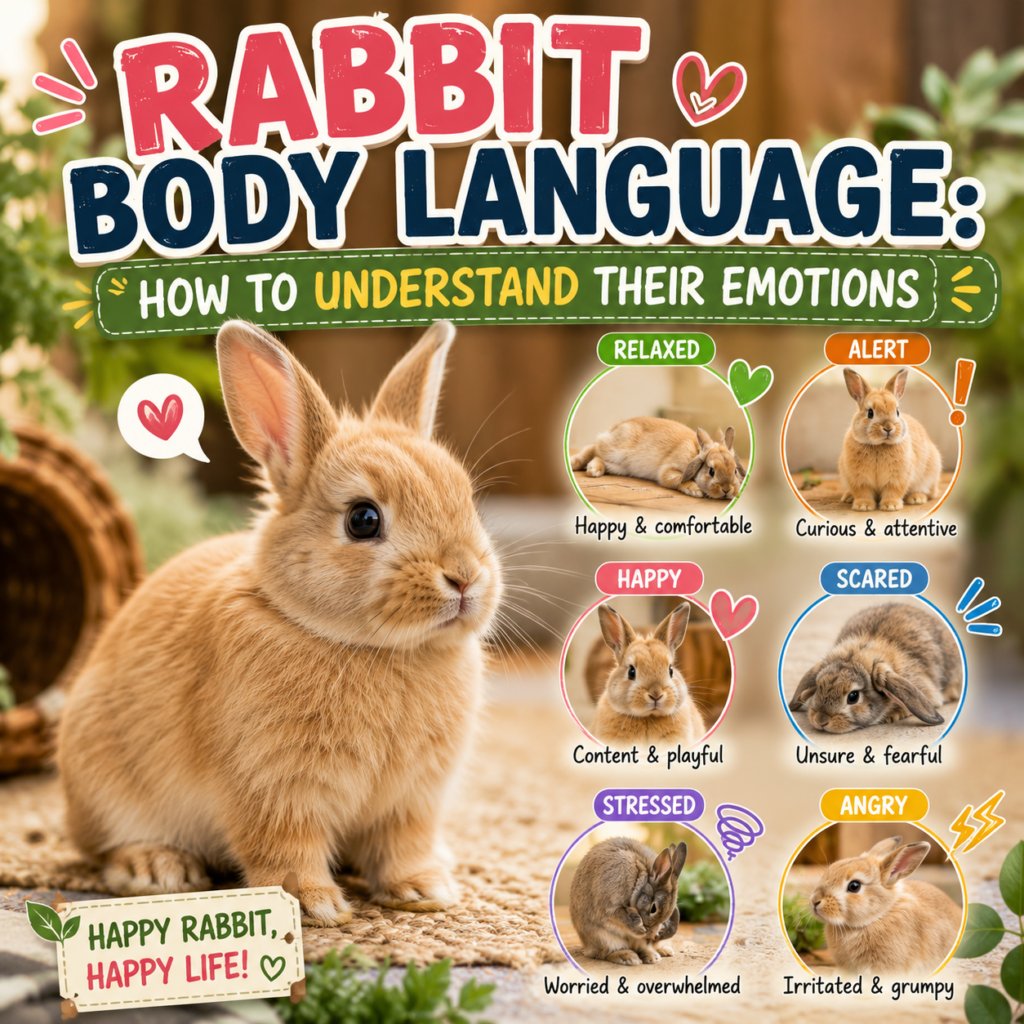
1. Happy and Content: The “Binky” and Beyond
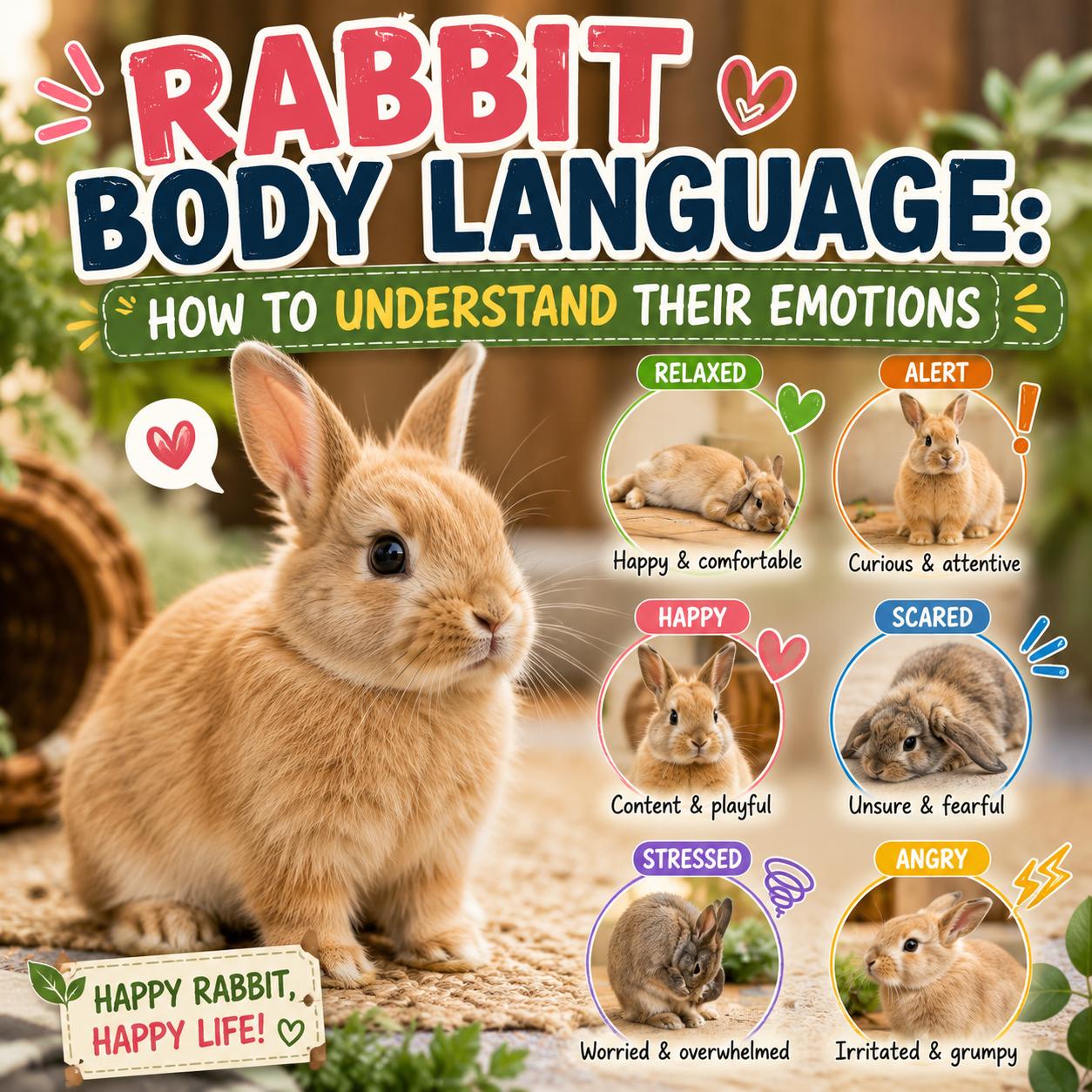
When a rabbit feels safe and joyful, they aren’t afraid to show it. Look for these signs of a happy bunny:
- The Binky: This is the ultimate sign of joy! A rabbit will jump into the air, twist their body, and flick their feet. It’s an expression of pure, unadulterated happiness.
- The “Flop”: If your rabbit suddenly throws themselves onto their side and lies still, don’t panic! This is a “flop,” and it means they feel completely safe, relaxed, and secure in their environment.
- Gentle Teeth Clicking: Often called “purring,” this soft, rhythmic grinding of the teeth usually happens when your rabbit is being petted and is thoroughly enjoying the affection.
2. Fear and Stress: Subtle Warning Signs
As prey animals, rabbits are experts at hiding illness or fear. Recognizing these signals early is vital for their well-being:
- The Thump: When a rabbit feels threatened or angry, they will stomp their back foot hard against the ground. This is an alarm signal to other rabbits (or you!) that there is “danger” nearby.
- Wide Eyes: If your rabbit’s eyes look abnormally large or the whites are visible, they are likely in a state of high alert or terror.
- Freezing: A rabbit that stands perfectly still, pressed against the floor with their ears tucked back, is attempting to hide. They are likely frightened and trying to become “invisible.”
3. Aggression and Boundaries: “Back Off!”
Even the sweetest bunny can get grumpy if they feel their space is being invaded.
- Lunge/Charge: If your rabbit makes a sudden movement toward you or your hand, it is a clear message to back away.
- Nipping: A light nip is often a request for space, whereas a hard bite is a sign of extreme frustration or fear.
- Ears Back, Nose Tensed: If their ears are flattened against their neck and their nose is twitching rapidly, they are feeling tense and may be preparing to defend their territory.
4. Affection and Social Bonding
Rabbits are social animals that thrive on companionship. If your bunny is displaying these behaviors, you are doing a great job:
- Grooming You: If your rabbit licks your hand or clothes, they are grooming you, just as they would a partner. This is a massive compliment and a sign of trust!
- Nudging: A soft nudge with their nose is often a way of saying, “Hello, pay attention to me!” or “Could you move a little? You’re in my way.”
- Chin Rubbing: Rabbits have scent glands under their chin. When they rub their chin on you or objects, they are “marking” them as their own. It’s a sign that they feel comfortable enough to claim you as their person.
Conclusion: Building the Bond
Understanding rabbit behavior takes time and patience. Every bunny has a unique personality; some are bold and adventurous, while others are shy and reserved. Spend time observing your rabbit from a distance, respect their need for personal space, and never force an interaction.
By becoming a student of your rabbit’s body language, you will foster a deeper connection and ensure your bunny feels happy, safe, and understood in your home.