If you have decided to welcome a fluffy pocket pet into your home, you will instantly face a classic crossroads at the pet store or rescue center: Should you get a Syrian hamster or a Dwarf hamster?
While they both belong to the same rodent family, choosing between these two varieties isn’t just about picking a size. Syrian and Dwarf hamsters possess completely distinct biological wiring, social requirements, personality traits, and handling difficulties. Picking the wrong type for your lifestyle can lead to accidental bites, escape artist headaches, or severe territorial aggression.
Let’s dive into the ultimate Syrian vs. Dwarf hamster face-off to discover which tiny companion matches your home perfectly.
Meeting the Competitors: Core Differences
Before breaking down their behaviors, let’s look at the basic physical profiles of these two popular rodents:
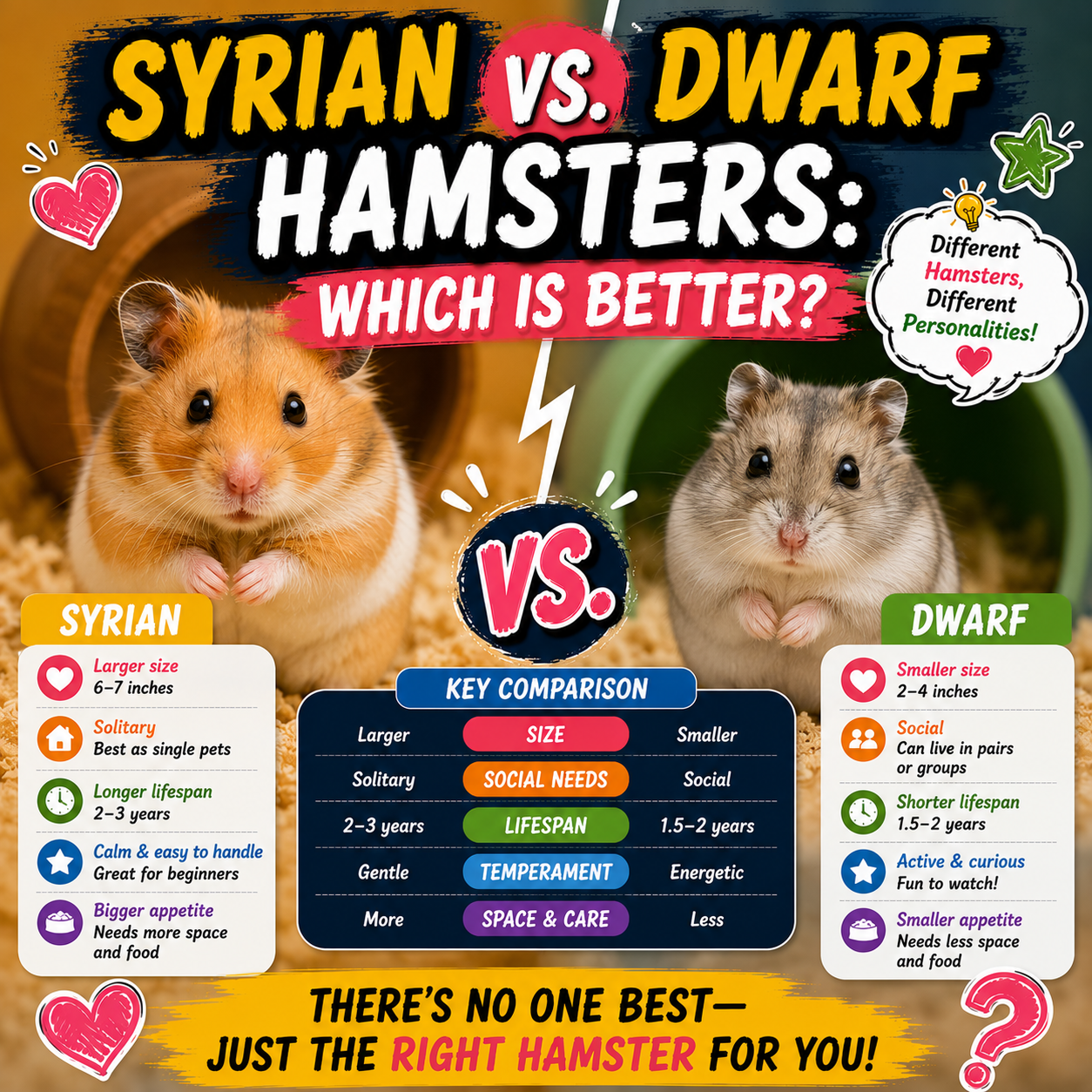
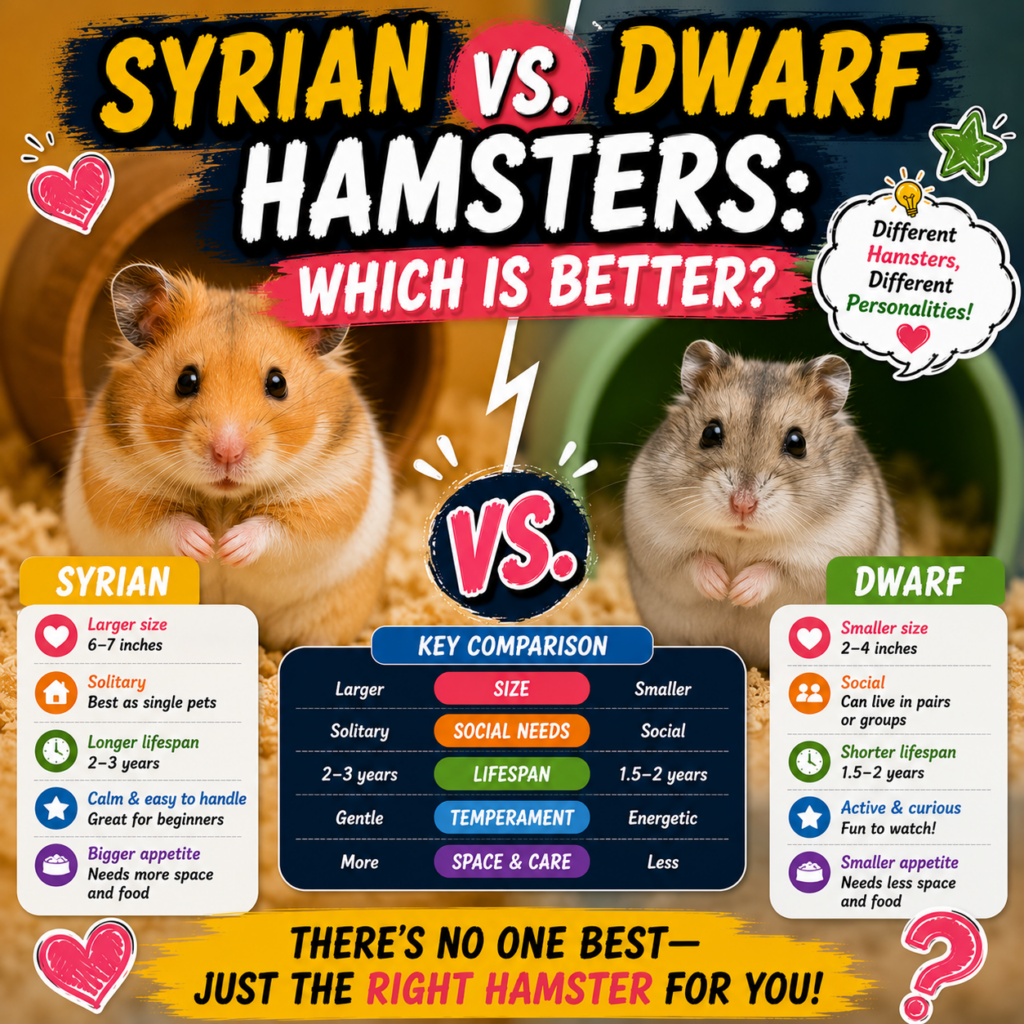
- The Syrian Hamster (Mesocricetus auratus): Often called the “Golden Hamster” or “Teddy Bear Hamster,” this is the classic, larger variety. They feature prominent, expressive eyes, rounded ears, and grow to a robust 5 to 7 inches (13 to 18 cm) in length.
- The Dwarf Hamster (Phodopus family): This group includes several distinct breeds, such as the Roborovski, Winter White, and Campbell Dwarf. They are truly pocket-sized, maxing out at a tiny 2 to 4 inches (5 to 10 cm) long, with aerodynamic, bullet-shaped bodies.
1. Social Architecture: Solitary vs. Semi-Social
This is the absolute most critical biological difference every owner must understand before buying a cage setup.
- Syrian Hamsters are STRICTLY Solitary: In the wild, Syrian hamsters live entirely alone in dry deserts. They possess absolute zero tolerance for other rodents. From the age of 6 to 8 weeks onward, a Syrian hamster must live 100% alone. If you place two adult Syrians in the same cage, they will engage in a violent, bloody territory war that almost always ends fatally.
- Dwarf Hamsters are Semi-Social: In their native habitats, Dwarf hamsters occasionally live in small family colonies. In captivity, a pair of Dwarf hamsters can sometimes live together happily—but only if they are same-sex littermates raised together from birth. However, even bonded Dwarf pairs can suddenly turn on each other as adult hormones kick in, requiring you to have a backup cage ready just in case.
2. Personality, Handling, and Taming
Are you looking for a cuddly pet to hold while watching a movie, or an active, entertaining display animal to observe?
- Syrian Hamsters (The Gentle Giants): Because Syrians are larger and move at a noticeably slower, more deliberate pace, they are much easier to tame and hold. They are generally patient, less skittish around human hands, and rarely bite once properly socialized. This makes them the undisputed best choice for older children and beginners.
- Dwarf Hamsters (The Midnight Speedsters): Dwarf hamsters are hyperactive, lightning-fast, and incredibly agile. Roborovski Dwarfs, in particular, can sprint across a room in the blink of an eye. Because they are so tiny and fragile, they can easily slip through your fingers or drop from your hands, making handling a high-stress activity. They are fantastic “look-but-don’t-touch” pets for dedicated hobbyists.
Head-to-Head Comparison Matrix
| Feature | Syrian Hamster 🐹 | Dwarf Hamster 🐾 |
| Adult Physical Size | 5 – 7 Inches (Large & Stocky) | 2 – 4 Inches (Tiny & Aerodynamic) |
| Social Requirement | Strictly Solitary (1 per cage) | Semi-Social (Pairs possible, but risky) |
| Ease of Handling | Excellent; calm, slow, easy to grip. | Difficult; fast, squirmy, highly fragile. |
| Biting Tendency | Very low (Once tamed properly). | Moderate (Due to defensive startle reflex). |
| Ideal Owner Profile | Beginners, families, older children. | Experienced keepers, visual observers. |
3. Habitat and Gear Requirements
Many beginners mistakenly assume that a smaller hamster means a smaller financial investment. In reality, Dwarf hamsters often require more engineered habitats than their larger cousins.
The Enclosure Floor Space Standard
Whether you choose a Syrian or a Dwarf, both require a massive amount of horizontal territory to prevent confinement stress and negative behaviors like bar biting. Always bypass standard pet-store wire cages and choose a solid glass tank or large DIY bin cage offering a minimum of 800+ square inches of unbroken floor space.
- Dwarf Trap Warning: Small Dwarf hamsters are masterful escape artists. Standard wire cages with bar spacing wider than 0.25 inches (0.6 cm) are a major hazard, as a tiny Dwarf can easily squeeze its skull through the bars and escape. Solid glass aquariums are highly recommended for Dwarfs.
The Fitness Wheel Matrix
Both varieties require a solid-surface running wheel to burn off midnight stamina without arching their spines painfully backward:
- Syrian Hamsters require a jumbo wheel with a minimum diameter of 11 to 12 inches.
- Dwarf Hamsters require a smaller wheel with a diameter of 8 inches—ensuring the wheel is light enough for their tiny bodies to spin safely.
👉 Ultimate Habitat Requirements:
[ Syrian Enclosure ] ──► Wide floor space + 12" Jumbo Wheel + 10" Paper Bedding
[ Dwarf Enclosure  ] ──► Solid glass walls + 8" Light Wheel + Multiple open hides
The Verdict: Which Is Better for You?
Choose a Syrian Hamster if…
You want a classic, responsive pocket pet that you can comfortably scoop up, carry around, and hand-feed fresh carrot ribbons. They are beautifully predictable, incredibly charming, and their solitary nature means you only need to manage one single, happy ecosystem.
Choose a Dwarf Hamster if…
You possess limited desk space but want a highly dynamic, visually entertaining habitat. If you enjoy building intricate underground setups filled with 6 to 10 inches of deep paper bedding, sand baths, and foraging puzzles, watching a speedy pair or single Dwarf manage their territory at night is pure cinematic joy.
Conclusion: Space and Respect Win Every Time
At the end of the day, neither hamster is universally “better” than the other—it all boils down to your personal handling expectations and cage capabilities. By respecting the Syrian’s need for complete solitude, securing the Dwarf’s enclosure against escape attempts, and providing a silent, spine-safe wheel, you will unlock a deeply rewarding relationship with one of the sweetest pocket pets in the world.